
An adventure drawn on a map
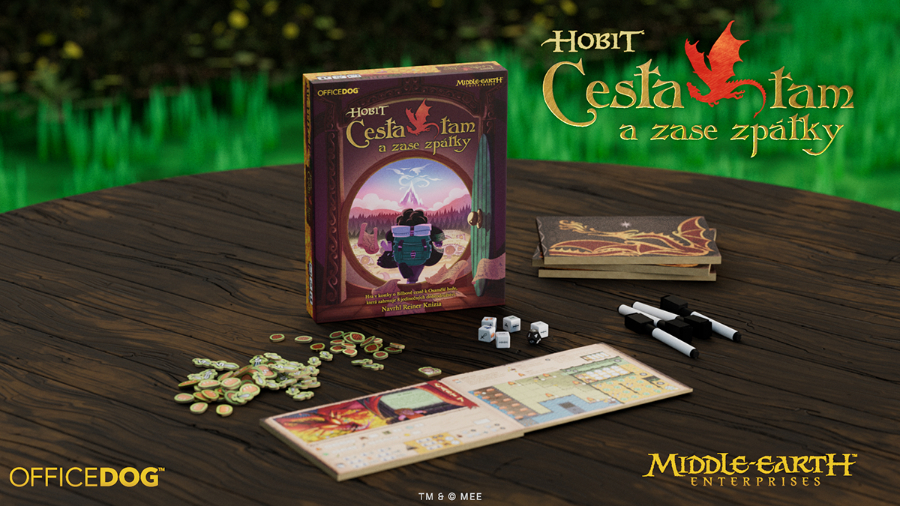
Bilbo Baggins had a plan: stay in his cozy hobbit-hole, eat well, and live quietly. But then Gandalf arrived, followed by thirteen dwarves – and quiet life was over. Bilbo got dwarves and a magic ring for his journey; you get a marker, a map, and a handful of dice. And believe me, that’s all you need.
Because the whole adventure is written onto that map. Every line you draw is a step across Middle-earth. Every symbol you roll is a decision – to host, to fight, to flee, or to pray for rescue. The Hobbit: There and Back Again retells Tolkien’s story in eight chapters, each one a half-hour game full of tension and surprises.
Dice that tell stories
On the table are five white dice with symbols, plus a black twelve-sider that drives events. The white dice bring:
-
Paths, to connect characters, places, and goals.
-
Bread, to feed the company during feasts or camps.
-
Swords, to fight enemies or alter the black die’s results.
-
Gandalf’s hat, unleashing special magical effects.
-
And the burglar action, letting you take the symbol you desperately need.
The black die is where the drama lies. Sometimes it triggers storms, sometimes spiders, sometimes wargs, or even the flames of Smaug that destroy houses in Lake-town.
Eight chapters, eight moods
The game unfolds as a campaign across Bilbo’s journey:
-
In An Unexpected Party, you welcome dwarves into Bag End and prepare food. A gentle introduction.
-
In Roast Mutton, three trolls block your way and every misstep hurts.
-
Riddles in the Dark becomes a tense puzzle, with Gollum’s riddles decided by the black die.
-
Out of the Frying-Pan into the Fire is a frantic race: wargs chase your company, flaming pinecones fly, and only the Eagles can save you.
-
In Mirkwood, spiders trap dwarves in webs and you race to free them.
-
The final act comes at the Lonely Mountain, and then the climax: Smaug attacks Lake-town, with the black die deciding which house burns. What began as calm path-drawing ends as a desperate sprint for survival.
Each chapter shifts the rhythm, the challenges, and the atmosphere – from a cozy feast to fiery inferno.
Playing with others
Though each player draws on their own map, the game isn’t solitary. Victory often depends on racing – who connects key points first, who defeats enemies first, who earns the better reward. And the black die brings events that affect everyone at the table: storms, warg attacks, or houses burning in Lake-town. It creates constant tension, keeping eyes on both your own map and your opponents’.
And if you’re alone
The Hobbit also offers a full solo mode. You have only eight rounds to complete the journey, splitting dice into sets and drawing shapes from the black die each turn. Every decision is yours alone – no one to save you. It feels tighter, harsher, and often unforgiving – yet still captures the full theme of the adventure.
Why it works
The strength of The Hobbit lies in how mechanics and story are inseparable. The black die isn’t just a number – it’s a storm, a riddle, or Smaug’s fire. Bread, swords, pinecones, and eagles aren’t just icons – they’re story beats that carry you forward. Each chapter adds something new, and together they weave a journey drawn directly onto your map.
Verdict
The Hobbit: There and Back Again isn’t heavy strategy – it’s a story you live. One game you’re laughing at dwarves overcrowding Bag End, the next you’re holding your breath as spiders capture your friends, and at the end you’re sweating over the black die as Smaug attacks your house.
In just half an hour, you’ll experience Bilbo’s entire journey there and back again – and the map you leave behind is a diary of the adventure you’ve just lived.